
Prevention and workforce wellbeing
Movement programs that fit the work
Short, practical movement sessions can help teams prepare for the tasks ahead and discuss comfort and wellbeing. HA physiotherapists and exercise physiologists tailor routines to the role and people, without treating stretching as a substitute for safer work design.
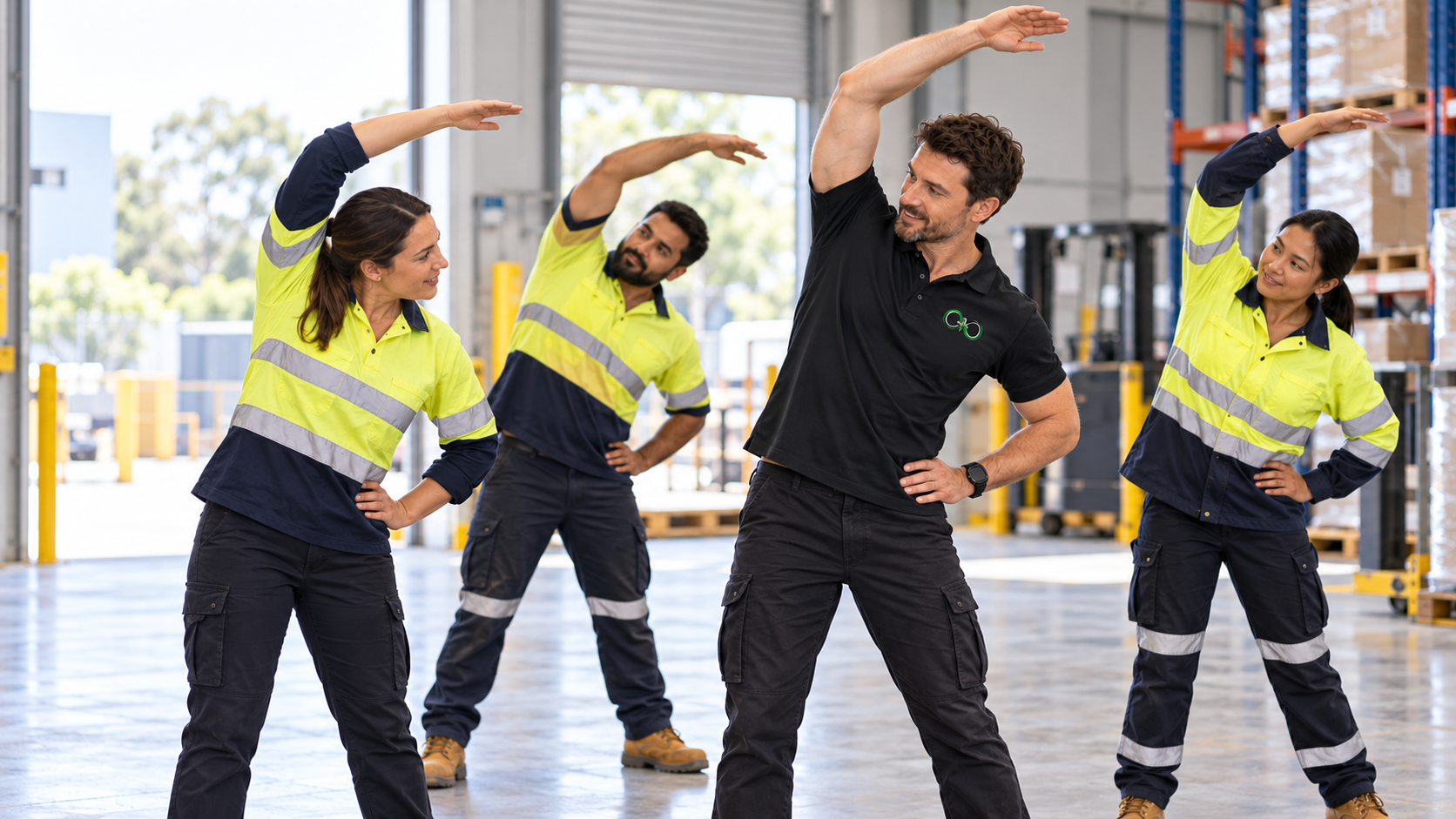
Built around your roles
We start with the work people perform, the physical demands, the work environment and the time available. The program may include movement preparation, mobility and education tailored to the agreed scope.
Practical delivery
We can discuss a one-off session, a team routine or guidance for supervisors to support consistent delivery. We will agree the format, location and fee before work begins.
How we build a useful routine
- Understand the shift. We review work demands, session time, space, workforce mix and any safety constraints.
- Design. A clinician selects accessible movements and guidance relevant to the agreed purpose.
- Pilot. We demonstrate the routine, invite worker feedback and adjust what does not fit.
- Embed. We can provide a simple routine guide and discuss who will lead it and when it should be reviewed.
Questions employers ask
Will a warm-up prevent injuries?
No program can promise that. Its role is movement preparation and wellbeing; work hazards still require suitable risk controls.
Can everyone do the same routine?
We plan options and encourage anyone with an injury or health concern to seek individual clinical advice before participating.
How long is a workplace warm-up session?
Session length and frequency depend on the shift, available space, work demands and workforce. We agree a practical format when scoping the program.
What if someone has an injury or health concern?
A group routine is not individual treatment. We provide suitable options and ask anyone with an injury or health concern to seek individual clinical advice before taking part.
Part of a wider prevention plan
Warm-up and stretching alone have not been shown to prevent hazardous manual-task injuries. We position these programs as movement and wellbeing support, alongside the employer's task design, equipment and other risk controls. If the work itself presents a hazard, we can connect findings to job demand analysis (JDA) and manual-task review.
Further guidance: SafeWork NSW manual-task training position.